
Brand Chunking is the principle that transforms complexity into clarity without losing the depth of your brand.
After nearly three decades of building brands, I’ve noticed something that appears in almost every project.
The more successful a company becomes, the harder it is to explain.
New products are added.
New services.
New audiences.
New technologies.
More success stories.
More capabilities.
Then the time comes to build a new website, create an investor presentation or redefine the company’s messaging, and I almost always hear the same sentence:
“We need to make sure everything is included.”
I completely understand why.
Every department believes its expertise is essential.
Every team believes its value proposition is the one that will convince the customer.
But from the customer’s perspective, something very different happens.
The more information we add, the harder it becomes to understand the bigger picture.
Over the years, I’ve learned that the strongest brands are not the ones that say the most.
They’re the ones that organize information in a way that people can easily understand, remember and repeat.
At some point, I realized I was following the same process in almost every branding project, so I decided to give it a name.
I call it Brand Chunking.
What is Brand Chunking?
Brand Chunking is the process of organizing a complex brand into a small number of meaningful ideas that people can quickly understand and remember.
Notice what it is not.
It isn’t about removing information.
It isn’t about oversimplifying your business.
It isn’t about making your company smaller.
It’s about organizing complexity in a way that matches how people naturally process information.
A great brand doesn’t reduce complexity.
It makes complexity easier to navigate.
When your homepage tries to say everything
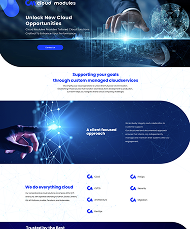
I often see technology companies trying to fit everything they do onto their homepage.
Artificial Intelligence.
Cloud Security.
Automation.
Analytics.
Threat Detection.
Compliance.
Managed Services.
And the list goes on.
From the company’s perspective, every capability matters.
From the visitor’s perspective, it’s simply a list.
Instead, I ask a different question.
If someone visited your website for one minute and then had to explain your company to a colleague, what would you want them to remember?
The answer is rarely twenty capabilities.
It’s usually three or four big ideas.
For example:
Detect
Protect
Respond
Control
Nothing has been removed.
The story has simply been organized.
That’s Brand Chunking.
Great presentations don’t impress with information. They stay in people’s minds.
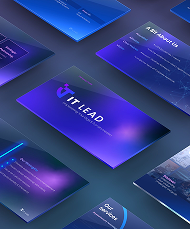
One of the most common mistakes I see in investor presentations is the desire to prove everything.
Every achievement.
Every feature.
Every statistic.
Every advantage.
But after the meeting, investors rarely remember the list.
They remember the story.
That’s why I prefer building presentations around a small number of strategic ideas.
What problem are you solving?
Why does it matter now?
Why is your company uniquely positioned?
Where can this business go?
Everything else supports those ideas.
It doesn’t compete with them.
Five seconds can decide whether someone stops or walks away
Trade shows are one of my favorite places to observe branding in action.
They also reveal one of the biggest communication mistakes companies make.
Trying to tell the entire story at once.
Every product.
Every service.
Every technology.
Every logo.
Every certification.
Every partnership.
But visitors don’t stand in front of your booth for five minutes.
They make a decision in seconds.
Brand Chunking changes the question.
Instead of asking, “How much can we show?”
Ask,
“What’s the one idea that makes someone stop, and what are the next three ideas that make them stay?”
One brand. Four audiences. Four different conversations.
This insight became one of the foundations of Agile Branding.
Imagine a biotech company.
It speaks to investors.
Hospitals.
Distributors.
Future employees.
The company’s identity doesn’t change.
Its values don’t change.
Its vision doesn’t change.
But every audience arrives with different questions.
An investor wants growth potential.
A hospital wants trust and clinical confidence.
A distributor wants a reliable business partner.
A potential employee wants to know if this is a company they want to join.
Brand Chunking doesn’t change the brand.
It reorganizes the same story around what matters most to each audience.
That’s one of the core ideas behind Agile Branding.
The core stays consistent.
The expression adapts.
The positioning test I use in almost every branding project
There’s one question I love asking at the beginning of every strategic process.
If you had to explain your company through only four memorable ideas, what would they be?
It sounds simple.
It rarely is.
If every service feels equally important, there’s probably no hierarchy.
If you can’t group your capabilities under a few meaningful ideas, your positioning may not be clear enough.
If every audience requires an entirely different story, your brand identity probably needs more focus.
That’s why Brand Chunking isn’t just a communication tool.
It’s a strategic branding tool.
It helps reveal whether your brand is truly clear.
A simple exercise to try
Take a blank sheet of paper.
Write down everything your company wants to say.
Everything.
Now forget your internal departments.
Forget your service list.
Forget your organizational chart.
Instead, organize everything according to how your customers think.
If you can structure your entire brand around three or four powerful ideas, people will understand you faster.
If you can’t, the challenge probably isn’t design.
It’s strategy.
A final thought
After nearly three decades in branding, I’ve come to believe that the biggest challenge brands face isn’t creating more content.
It isn’t producing more messages.
It’s creating more clarity.
The strongest brands aren’t the ones that say the most.
They’re the ones that take a complex business and organize it into ideas that people can understand, remember and confidently share with others.
To me, that’s the real meaning of Brand Chunking.
Not making your brand simpler.
Making it clearer, so its complexity becomes a strength instead of a barrier.