
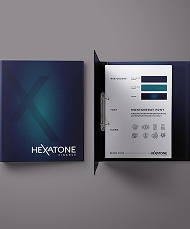
And how the brand book shifted from a strategic asset to a point of friction
For many years, the brand book was one of the most important assets an organization had.
It provided clarity, order, clear rules, and a consistent language.
In a relatively stable world, where audiences were well defined, channels were limited, and messages lasted for years, a static brand book worked.
But in 2025, reality has changed.
Not slightly.
Fundamentally.
The problem is not that brand books are no longer important.
The problem is that they remained static
In a world that never stops moving.
A brand book is built for a specific moment in time
A classic brand book is based on a single point in time.
Research, decisions, values, visual language, messaging, and rules.
At the end of the process, a closed document is delivered
designed to preserve consistency and prevent deviation.
The underlying assumption is
that the world may change
but not in a way that requires a meaningful shift in brand language.
That assumption no longer holds.
What happens when reality moves faster than the document
In conversations with leadership teams, the same gap appears again and again.
The brand is defined.
The book exists.
But the questions change faster than the ability to update the document.
How do we speak to a new audience
How do we adapt messaging for a new market
How do we respond to regulatory change
How do we integrate artificial intelligence without losing identity
A static brand book was never designed to answer these questions.
It was designed to protect what already exists
not to support the motion.
This is where friction begins.
Organizations no longer need more rules, but better decision-making
In an era of multiple audiences, channels, and continuous data flow,
The core branding challenge is no longer consistency.
It is decision-making in real time.
A static brand book says
This is allowed
This is not
Reality asks
What do we do now
And this gap turns the brand book from a guide
into something people work around.
The brand book is a living system
The alternative is not to eliminate the brand book
but to change its role.
In Agile Branding, the brand book is not the endpoint.
It is the starting point.
It defines principles
not rigid rules
It provides direction
not a list of restrictions
It enables adaptation
not just enforcement
Brand language is not stored in a file.
It lives inside the organization
and evolves through continuous listening to data, the field, and people.
Why this aligns naturally with the age of artificial intelligence
AI changes both the speed of decision making
and the volume of information available.
When data flows in real time
and markets respond instantly
branding that is not built for movement
simply cannot keep up.
A static brand book cannot operate alongside AI.
A living branding system can.
Because it is built on principles
not fixed templates.
When a static brand book begins to cause harm
When there is more than one core audience
when the organization operates across multiple markets
when messaging needs to change frequently
and when every branding decision requires special approval
At that point
the brand book no longer supports movement
it limits it.
Not intentionally
but structurally.
Closing thought
A static brand book asks
how do we preserve what was defined
A living branding system asks
how do we make good decisions inside change
And in 2025
this is no longer a design question
it is a leadership question.
For a deeper perspective,
the main article on this site explores Agile Branding as a living system in the age of artificial intelligence
and shows how brands can remain precise
even as reality keeps shifting.
Because the real question is not
do we have a brand book
but
can our brand move
Let’s create something great together! Call us today to discuss your Branding and explore how we can collaborate to achieve success!
972-09-7744802, Ext-5 – Limor – c.e.o. Studio Baram