And how to know which one fits a world that never stops moving
For many years, classic branding worked well.
It gave organizations clarity, consistency, a clear visual language, and a sense of stability.
In relatively predictable environments – where markets evolved slowly, audiences were well defined, and messages remained relevant for years — this approach made sense.
But the world in which classic branding was built
is not the world organizations operate in today.
In 2025, branding is no longer challenged only by questions of identity.
It is challenged by speed, fragmentation, and constant change.
Classic branding is built around a fixed moment in time
Classic branding follows a linear process.
Research, strategy, visual language, brand book, implementation.
At the end of the process, a closed asset is delivered –
one that is meant to serve the organization for years.
The underlying assumption is that while the world may change,
it won’t change in ways that fundamentally challenge the brand structure.
That assumption is becoming harder to sustain.
As soon as audiences diversify, markets shift faster, or technology reshapes decision-making,
the friction begins to show.
Agile branding starts from a different premise
Agile Branding doesn’t ask
How do we define our brand right now?
It asks
How do we stay relevant as reality keeps changing?
Change is not treated as a disruption.
It is treated as a constant.
Instead of building a brand as a finished product,
Agile Branding builds it as a system.
The real difference is not design – it’s logic
Classic branding aims for uniformity.
Agile Branding aims for flexible consistency.
Classic branding works toward one clear message.
Agile Branding supports multiple messages, for multiple audiences, anchored in one identity.
Classic branding prioritizes closure.
Agile Branding prioritizes movement, learning, and adjustment.
This is not a semantic distinction.
It’s an operational one.
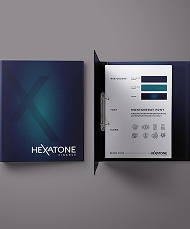
Brand book versus living system
In classic branding, the brand book is the endpoint.
It defines what is allowed and what is not.
In Agile Branding, the brand book is a starting point.
It defines principles that can be activated, tested, adapted, and refined.
The brand language is not something to be “protected” from change.
It is something designed to work with change.
This is why Agile Branding aligns so naturally with the age of AI –
an environment where data flows continuously
and decisions are made dynamically rather than periodically.
How the difference shows up in day-to-day reality
In classic branding, organizations tend to ask
How do we maintain consistency
How do we make sure everyone follows the rules
In Agile Branding, the questions shift to
How do we adapt without losing our identity
How do we respond quickly without fragmenting the brand
This shift is where competitive advantage begins to emerge.
When Agile Branding becomes necessary
Agile Branding is no longer optional when
There is more than one core audience
markets or regulations are changing rapidly
AI influences decision-making processes
Or leadership feels the brand is strong – but less precise than it used to be
At that point, classic branding doesn’t fail because it is wrong.
It fails because it was never designed for continuous motion.
A closing distinction
Classic branding asks
How do we build a stable identity
Agile Branding asks
How do we sustain a stable identity in constant change
In a world that keeps moving,
This is no longer a theoretical question.
It is a leadership decision.
For a deeper view of Agile Branding as a living system in the age of AI,
The main article on this site expands on how brands can be built not only to look right –
but to move, adapt, and hold over time.
Because the real question is not
Which brand looks better
but Which brand can carry reality
Let’s create something great together! Call us today to discuss your Branding and explore how we can collaborate to achieve success!
972-09-7744802, Ext-5 – Limor – c.e.o. Studio Baram