

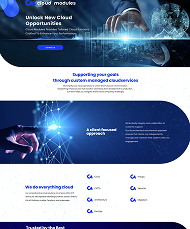

Your website may look great, function perfectly, and still fail to represent the company you’ve become.
Companies invest significant time and resources in building their websites. They define user experiences, develop visual identities, refine messaging, and create digital platforms designed to communicate who they are.
Then comes launch day.
The website goes live. The design is polished. The content is approved. Everything feels aligned.
But while the website is considered finished, the business keeps moving.
New products are introduced. Markets expand. Business models evolve. Customer expectations shift. The company grows into something bigger, more sophisticated, and sometimes fundamentally different from what it was when the website was first created.
And the website?
In many cases, it continues telling yesterday’s story.
A Great-Looking Website Can Still Be Strategically Outdated
Imagine a technology company that started with a single product serving a clearly defined market.
Over time, it expanded its offering, developed new capabilities, entered additional markets, and began targeting enterprise-level customers.
Yet its website still revolves around that original product.
The messaging speaks to an earlier audience. The navigation reflects an outdated business structure. The value proposition no longer captures the company’s full capabilities.
Visually, the website may be flawless.
Strategically, something is missing.
The gap between the business and its digital presence has grown.
And that gap can affect how potential customers understand the company, evaluate its capabilities, and perceive its relevance.
The problem isn’t necessarily the website’s design. It’s the story the website continues to tell.
Does Every Business Change Require a Website Redesign?
Absolutely not.
A company shouldn’t need to rebuild its website every time it launches a product or enters a new market.
But significant business changes should trigger an important question:
Does our digital presence still reflect who we are and where we’re going?
This is where Agile Branding introduces a different way of thinking.
Rather than treating a website as a finished deliverable, Agile Branding approaches it as part of an evolving brand system.
A system designed to maintain a clear identity while adapting to changing business needs.
Sometimes that means refining the messaging. Sometimes it requires restructuring content, improving navigation, redefining user journeys, or introducing new digital experiences.
And occasionally, a complete redesign is the right decision.
The key is understanding when change is necessary, what needs to change, and what should remain consistent.
Four Questions Every Leadership Team Should Ask About Its Website
- Does our website reflect the company we are today?
Not the company we were when the project began, but our current capabilities, services, solutions, and strategic direction.
- Are we communicating the right value to the right audience?
As businesses evolve, their audiences often evolve too.
A message that resonated with early customers may not be compelling to enterprise buyers, international markets, or new decision-makers.
- Is our website designed to support growth?
Can the platform accommodate new solutions, services, markets, and content without requiring a structural overhaul every time the business expands?
- Who is responsible for keeping the website strategically relevant?
Technical maintenance is essential, but it isn’t the same as strategic alignment.
Someone needs to assess whether the website continues to support the company’s positioning, messaging, and business objectives.
From a Static Website to an Adaptive Brand Experience
The traditional website development process often follows a predictable path:
Strategy. Design. Development. Launch.
But what happens after launch?
If a company’s website is one of its most important brand touchpoints, shouldn’t its strategic relevance be reviewed as the business evolves?
Agile Branding encourages organizations to move beyond a project-based mindset.
The objective isn’t constant redesign.
It’s building digital brand experiences that can evolve intentionally, while preserving the consistency that makes a brand recognizable and trusted.
That requires connecting brand strategy, digital design, content architecture, and ongoing business development.
Your Website Shouldn’t Be an Archive of Past Business Decisions
A successful website should do more than communicate what your company offers.
It should accurately represent the value you create today and support the direction you’re taking tomorrow.
Before investing in another website redesign, consider asking a different question:
Does our website need a new design, or has our business evolved beyond the story it currently tells?
Because the best digital experiences aren’t simply built to launch.
They’re built to remain relevant.
Studio Baram | Agile Branding
At Studio Baram, we combine brand strategy, digital thinking, and design to create websites that do more than look impressive at launch.
We develop digital brand experiences designed to support business growth, strategic clarity, and long-term adaptability.
Has your business outgrown its website? Let’s explore what needs to evolve.
